
If you missed it, see my previous newsletter:

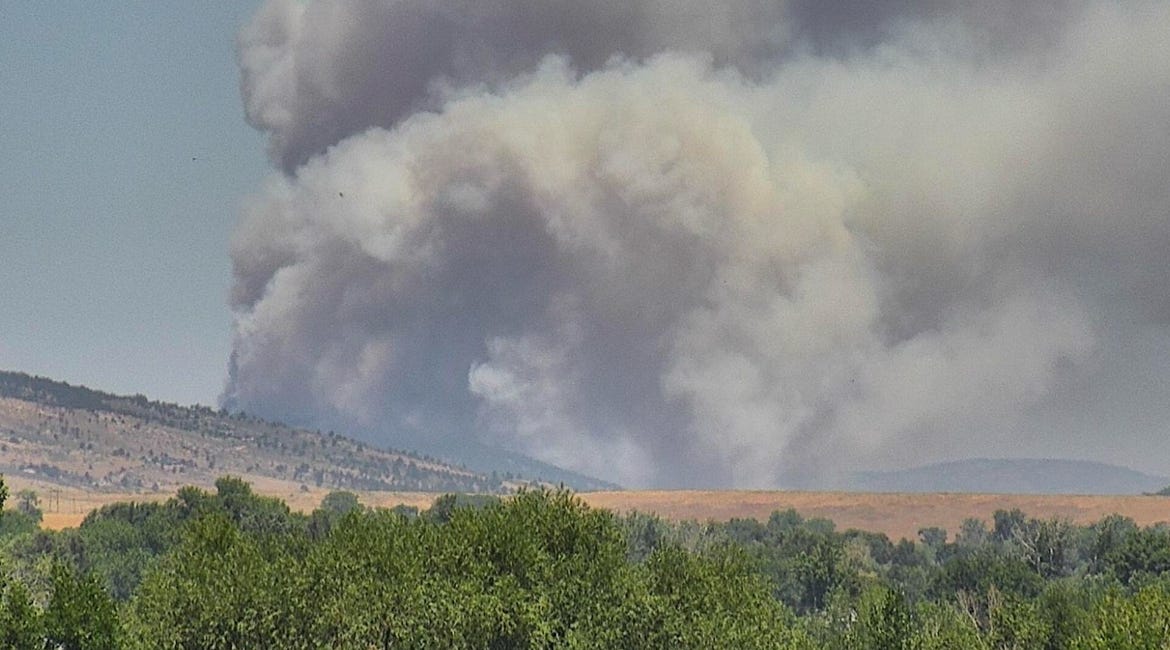
As of the time of this writing, at least 15 wildfires are currently burning almost 7,000 acres across Colorado, and the Park Fire in California is burning the equivalent of 4,000 football fields per hour.
What's going on? The long answer is the climate crisis. But, specifically, recent weather conditions have led to increased vegetation growth due to more rainfall over the past two years. However, record-breaking heat has dried this vegetation into ideal tinder, and combined with very windy conditions, it poses a heightened wildfire risk.
The result is that California is experiencing one of its largest wildfires in history, with smoke visible from space, while Colorado's heat and low humidity have led to uncontrollable wildfires and mass evacuations.
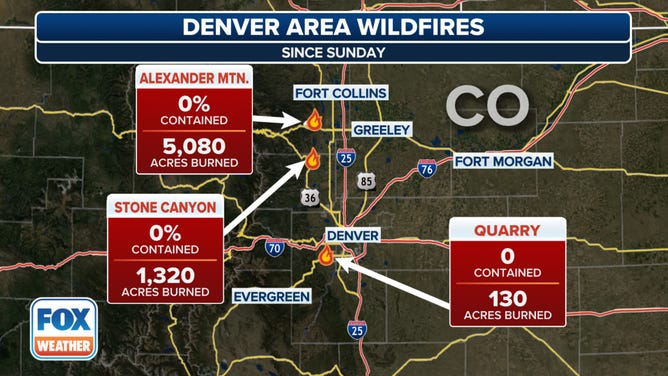
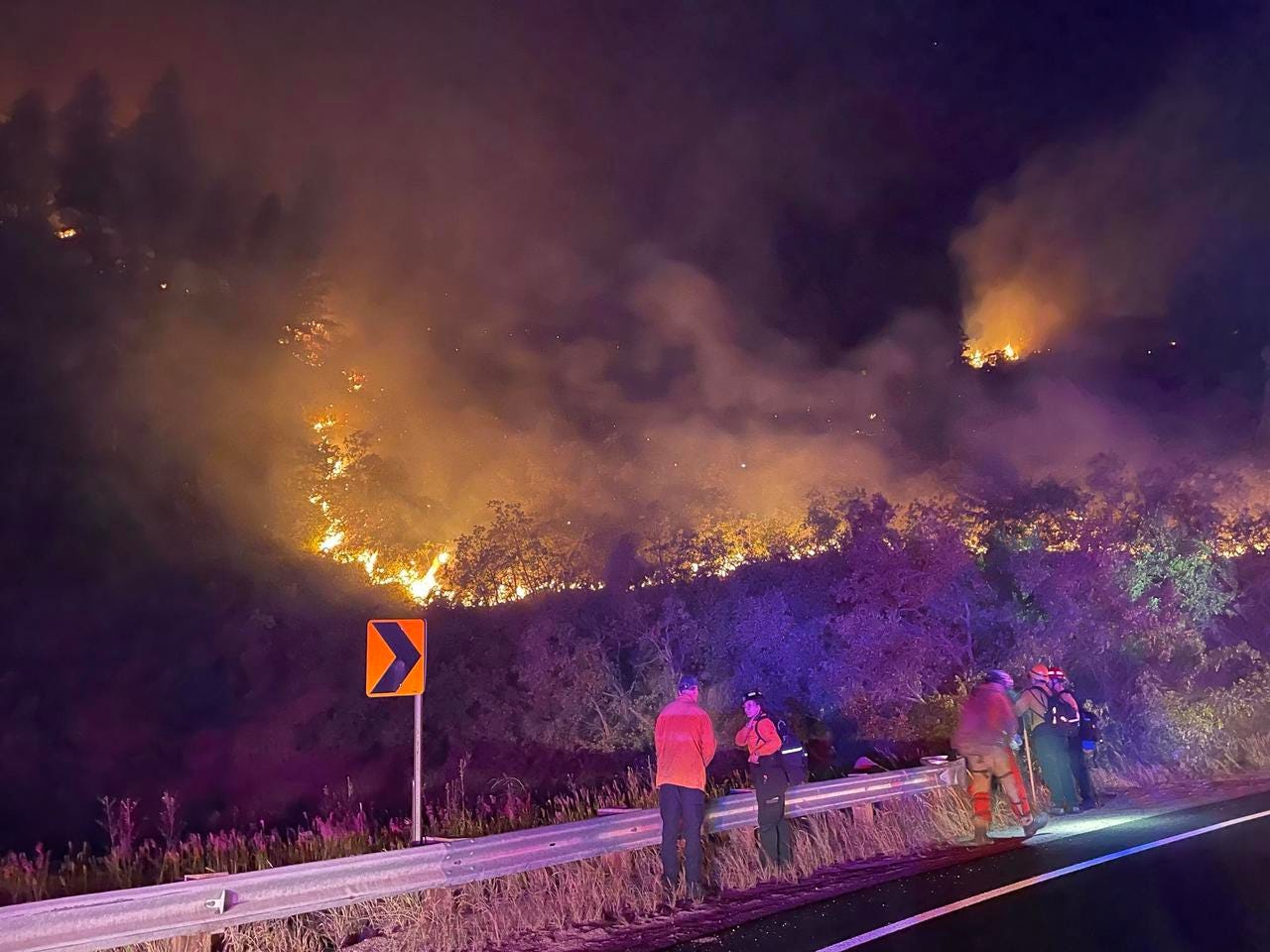
Overnight, in Jefferson County near Deer Creek Canyon, the third wildfire in Colorado in just the past 3 days broke out and is already at nearly 100 acres in size with nearly 600 homes evacuated. That particular area is really difficult terrain for firefighters and there are dangerous (and numerous) rattlesnakes they also need to maneuver around. An evacuation shelter was set up at Dakota Ridge High School in Littleton and large animals can be evacuated to the Jefferson County Fairgrounds in Golden.
“I’m afraid,” said my daughter, Gracie, as we began packing our things, just in case.
On that night - December 30, 2021 - the Marshall Fire was rapidly advancing towards Westminster, casting an eerie glow on the horizon.
Elected in November 2021, little did I know that within a month, the Marshall Fire's fierce embrace would test our resolve and unity as a city.
Westminster stood frozen in fear, every resident anxiously anticipating what the next moment might bring.
As the Marshall fires crept closer to Westminster, we activated our Emergency Operation Center, which meant we could have our emergency protocols in place across all departments with formalized coordination.
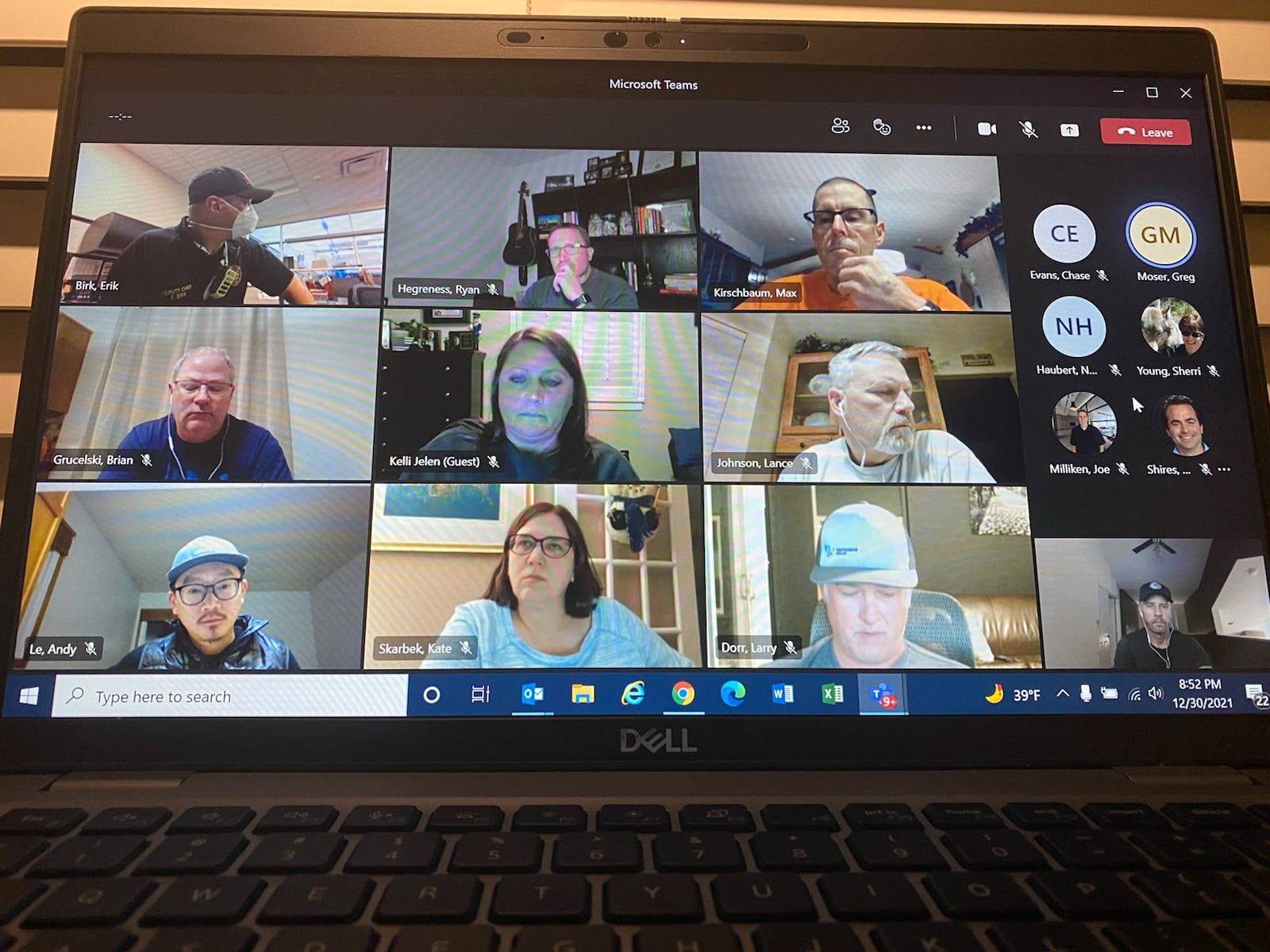
City Manager Jody Andrews delivered hourly updates via group text to us on City Council.
At 10PM, he sent this final text and a wave of relief washed over us:
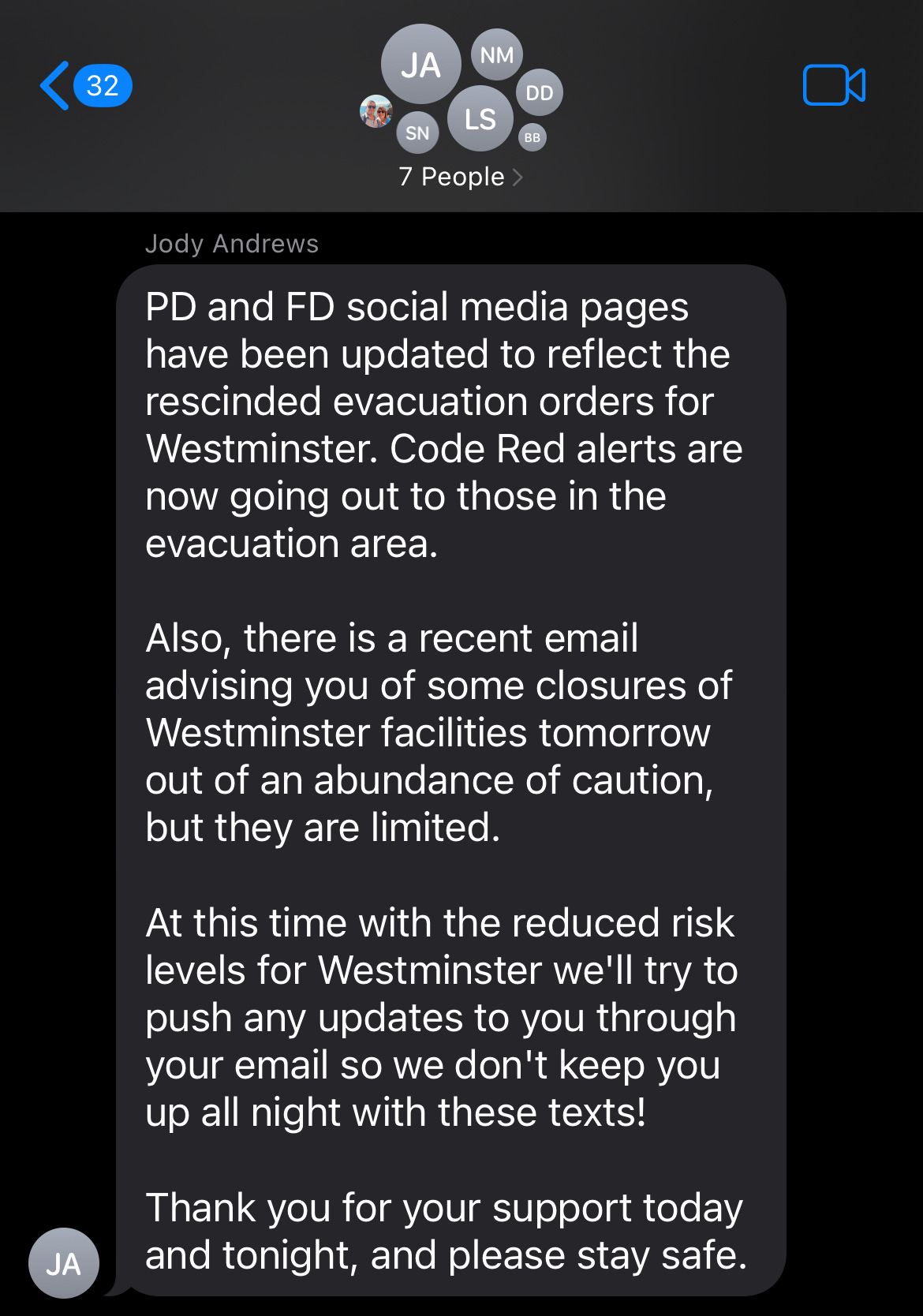
The 2021 Marshall Fire began near Marshall Lake. It burned 6,074 acres, destroyed 1,084 buildings, caused $513 million in damages, and resulted in one confirmed death and one presumed dead.
It came within just 2 miles of Westminster.
Despite the chaos, there was a glimmer of hope and gratitude and we appreciated the support we all had for each other that night.
After that night, I initiated and led several clothing drives for impacted families, but I also gained a new appreciation for the importance of fire mitigation. We then embarked on a path to ensure Westminster was better protected in the event of future fires.
First, it’s important to understand the contextual strength of our Fire Department:
Westminster Fire Department is fully in-house, responsible for the protection of life and property through fire prevention, education, fire suppression, and emergency medical and rescue services, as well as emergency management
Our Fire Department has the highest rating that a city/fire department can attain: Class 1 status through the Insurances Services Office (ISO) with additional accreditation via the Commission on Fire Accreditation International (CFAI), demonstrating that Westminster meets or exceeds industry best standard practices.
It is comprised of 199 personnel (144 line firefighters) and they respond to over 17,000 calls a year. 66% of those are medical related and the rest are fires, alarms, hazardous materials, rescues (water, technical, etc.) and public assists.
Even with such exemplary capacity and execution, we still knew we would have been in trouble if the Marshall Fire had reach us, so we had to ensure we were better prepared.
Westminster Hazard Mitigation Planning Process and Risk Assessment
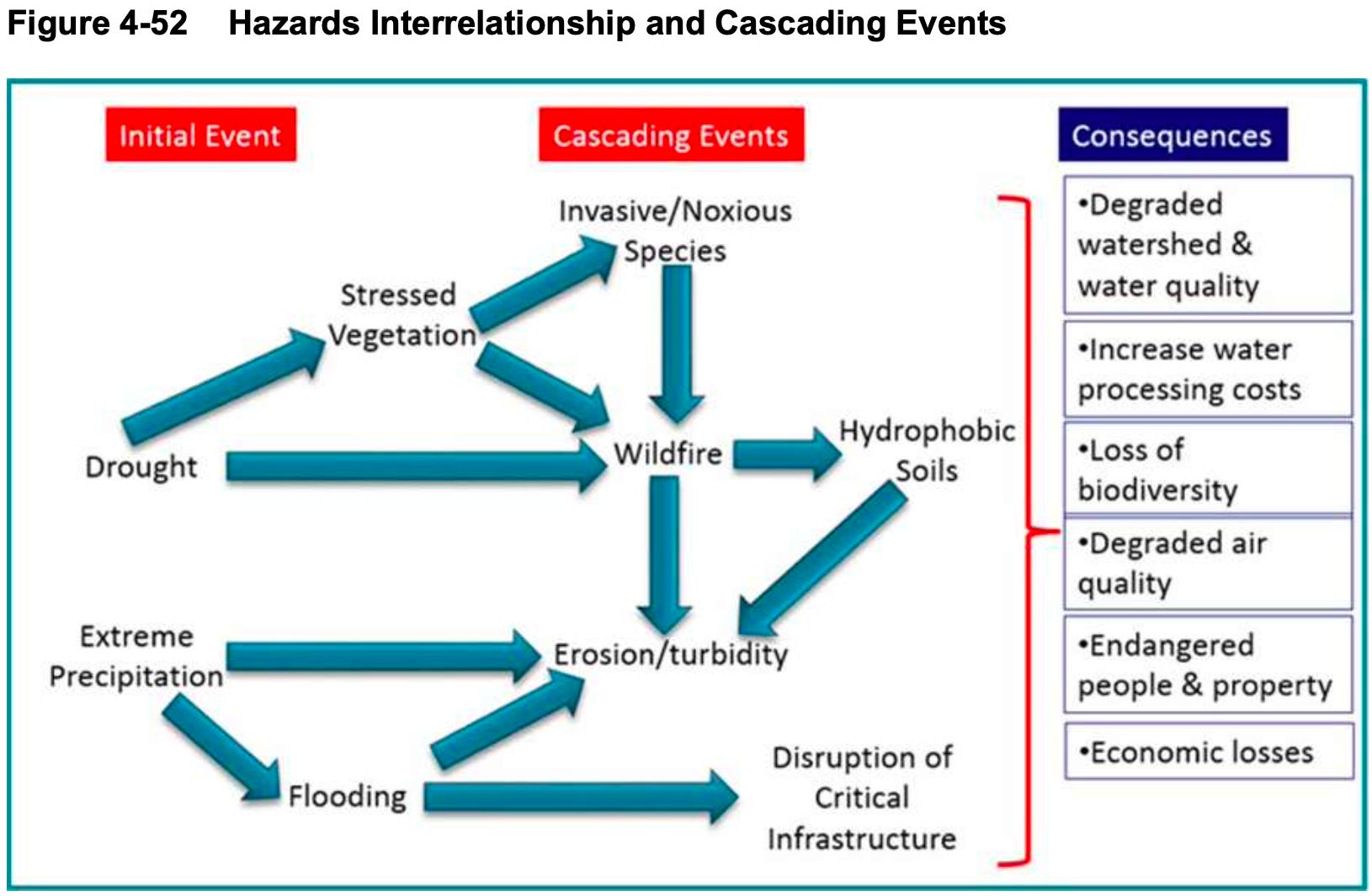
So…we updated our Westminster Hazard Mitigation Plan in 2022 and it serves many purposes:
Reduces our risks from hazards - documents Westminster’s natural hazards mitigation planning process, identifies relevant natural hazards and risks, and identifies the strategies the city will use to decrease its vulnerability and increase its resiliency and sustainability.
Serves as a tool to help decision makers direct mitigation activities and resources
Makes Westminster eligible for federal disaster assistance, specifically, the Federal Emergency Management Agency’s (FEMA) Hazard Mitigation Assistance (HMA) grant programs including the Building Resilient Infrastructure and Communities (BRIC), Hazard Mitigation Grant Program (HMGP), Flood Mitigation Assistance (FMA), and the Pre-Disaster Mitigation (PDM) program
Helps us earn points for the National Flood Insurance Program’s (NFIP) Community Rating System (CRS) to lower flood insurance premium community wide.
It is a 200-page document. It’s comprehensive. It goes far beyond wildfires, but I will try to focus specifically on wildfires for this conversation.
Hazard mitigation is defined by FEMA as “any sustained action taken to reduce or eliminate long-term risk to human life and property from a hazard event.”
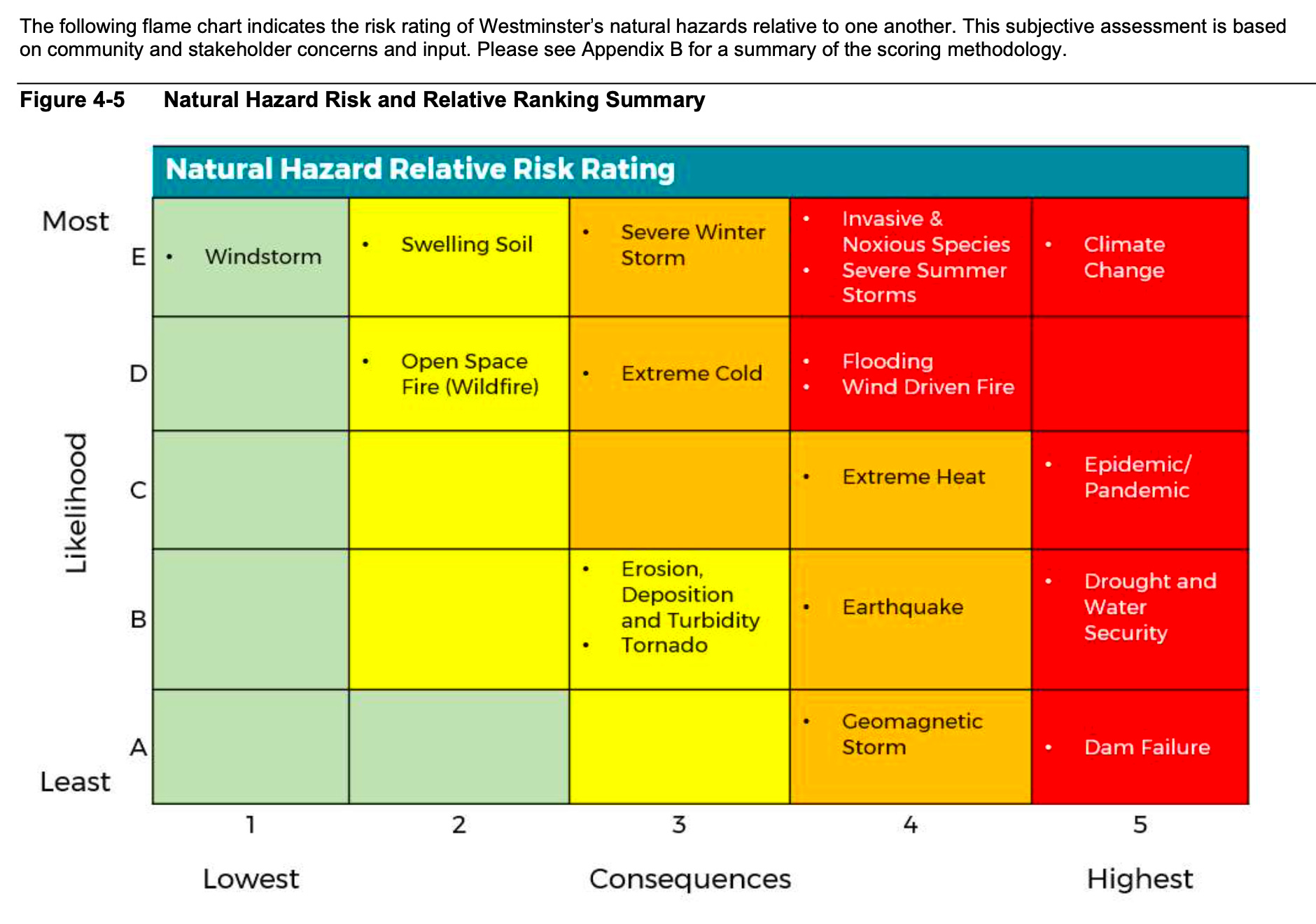
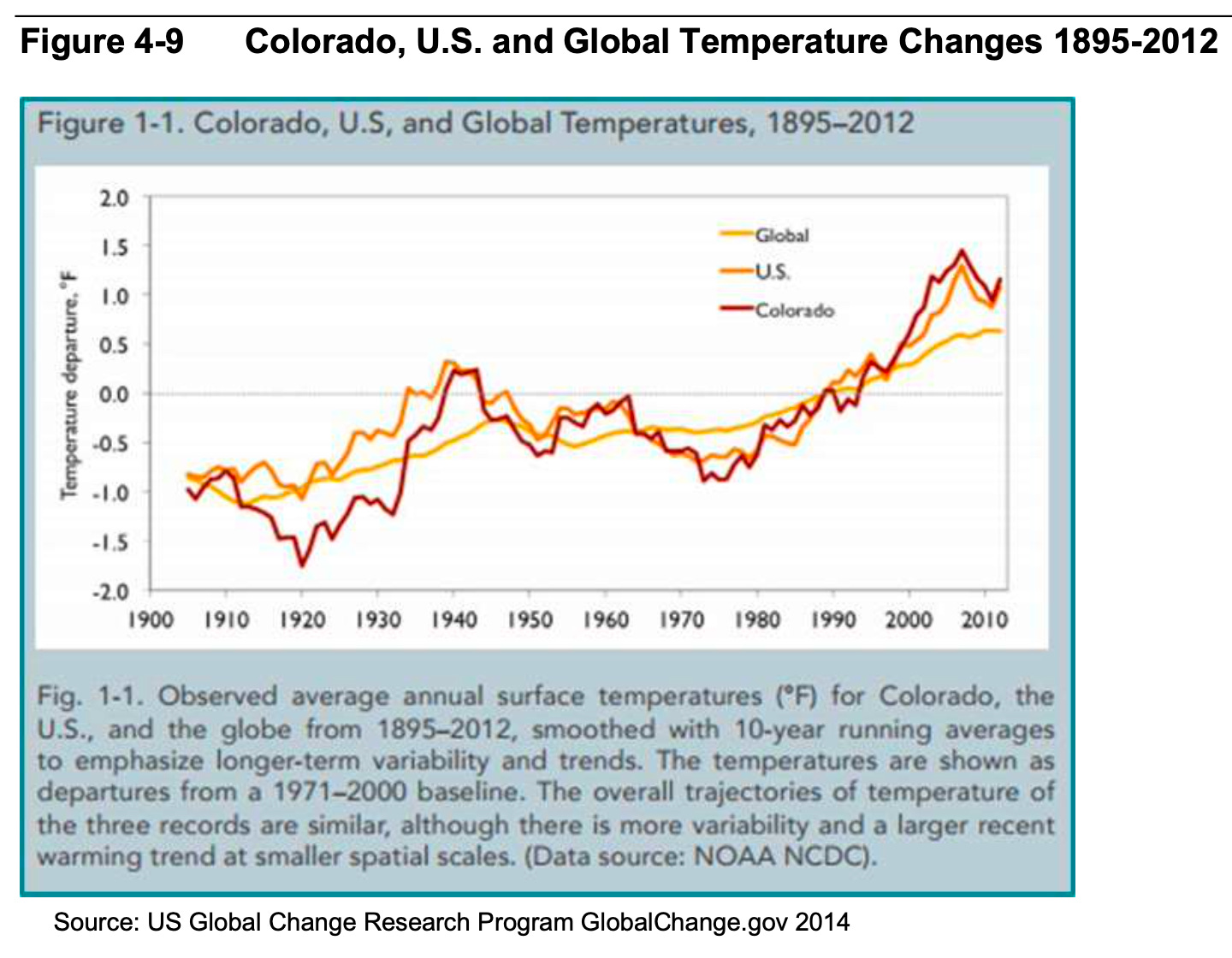
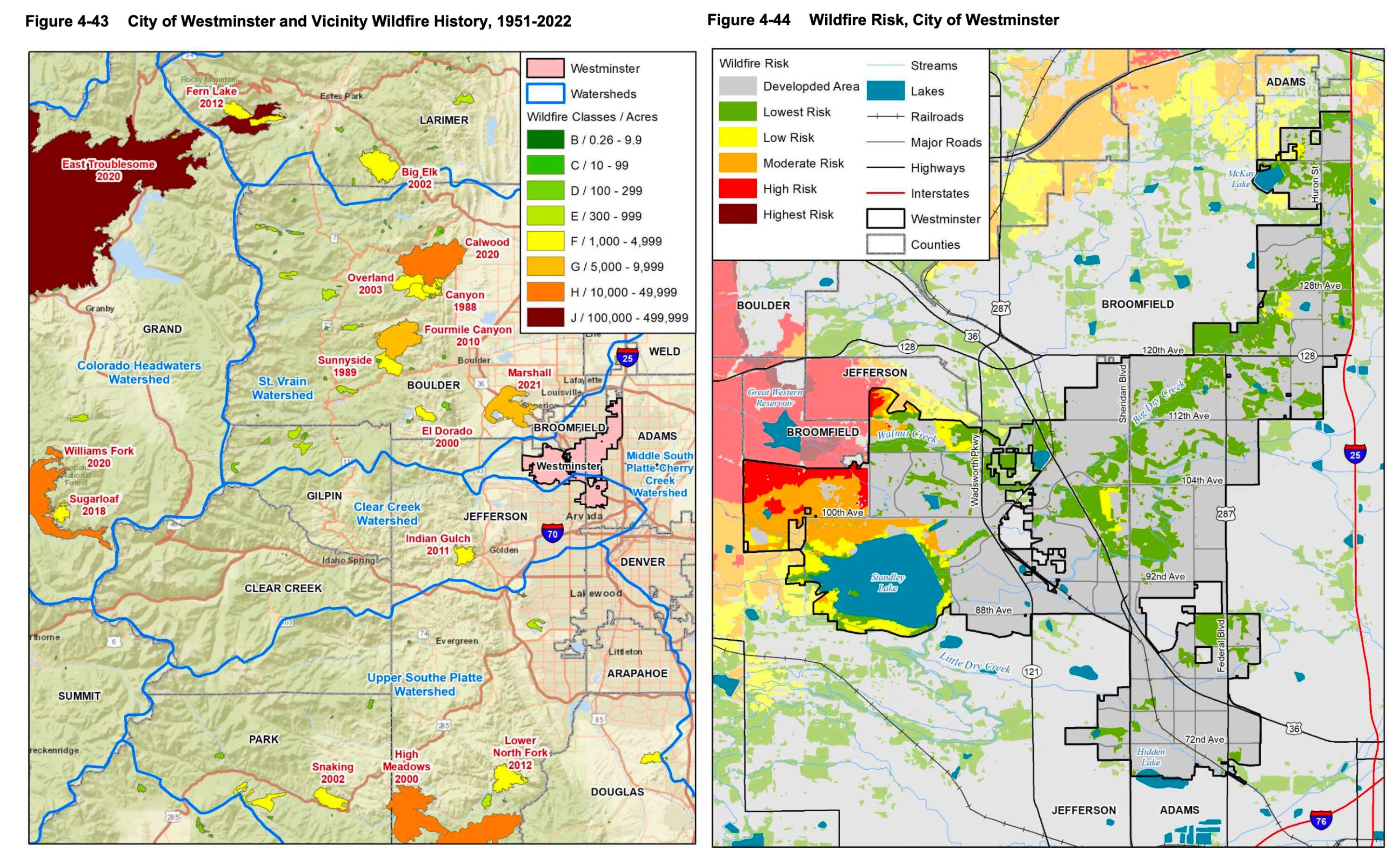
Wildfire has long been a major concern for Colorado, with recent years seeing increased risk of wind-driven fires in Front Range communities due to hotter, drier conditions. These fires, especially along the wildland-urban interface, can cause significant property loss, health impacts, and exacerbate social inequities. The Colorado Hills Open Space and Rocky Flats National Wildlife Refuge west of Westminster pose particular risks for rapidly spreading wildfires.
Westminster's landscape, featuring rolling hills, prairie grasses, and seasonal streams, is enhanced by the city's policy of maintaining 15% of its area as managed open space, costing approximately $1.5 million annually. This investment preserves natural habitats, supports wildlife, and improves residents' quality of life, although it also poses a brush fire risk due to factors like low humidity, high winds, and drought conditions.
Wildfire potential is influenced by fuel, such as dried grasses and dead trees that ignite easily; topography, where steep slopes accelerate fire spread; and weather, with high temperatures, low humidity, and strong winds creating ideal conditions for ignition and rapid fire growth.
On average, each dollar spent on mitigation saves society an average of $4 in avoided future losses in addition to saving lives and preventing injuries
Urban fire risks are heightened by modern building materials, dense housing, and flammable landscaping. Wind-driven fires in suburban areas can be highly destructive, requiring rapid evacuation.
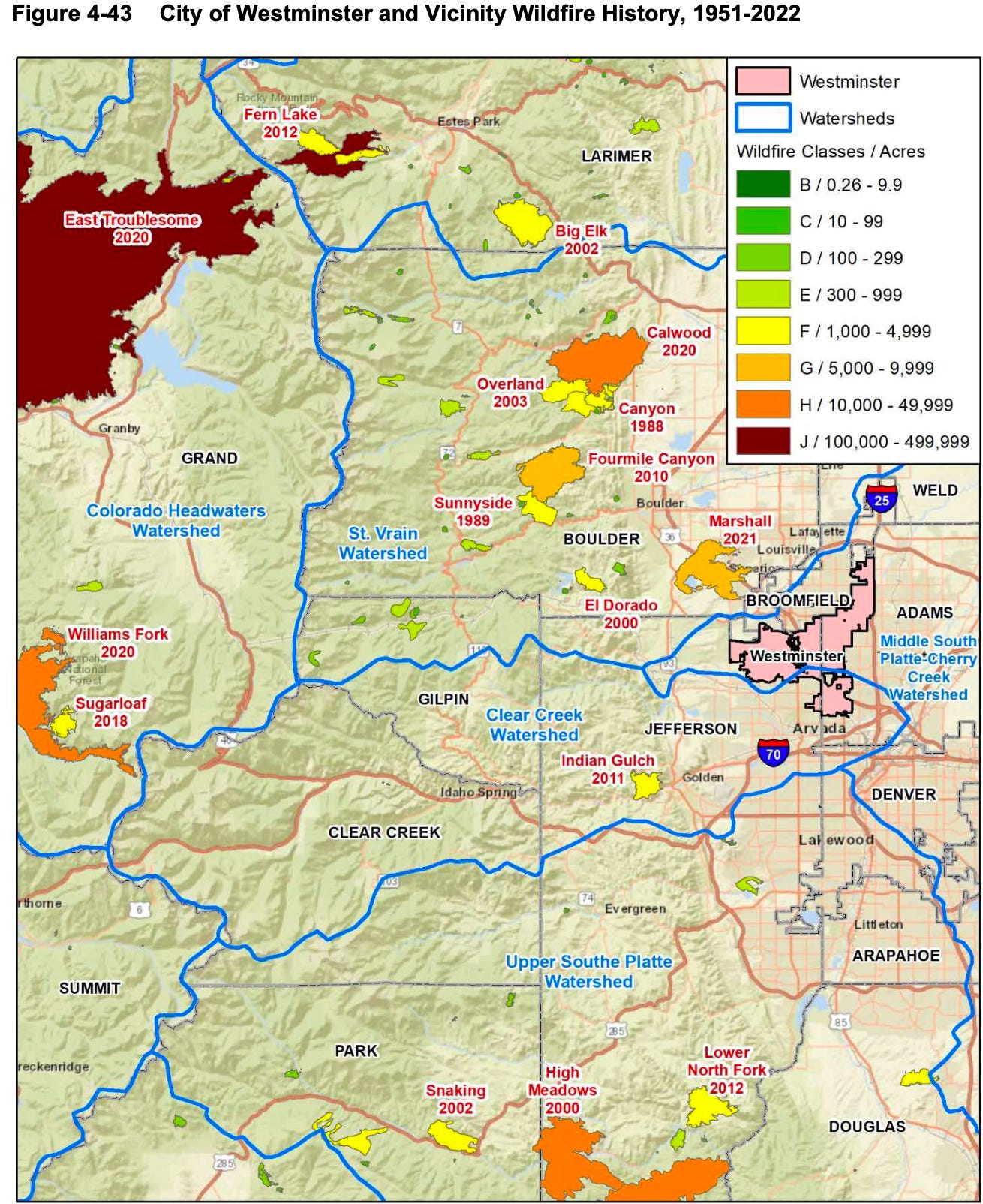
Vegetation fires occur annually and are usually controlled, but those that aren't can cause extensive damage, a risk exacerbated by climate change and human errors like smoking, campfires, equipment use, and arson, such as a recent case in California where a man from Chico pushed a burning car into a ravine, igniting a massive wildfire.
Westminster addresses these risks with community planning, fire codes, inspections, public education, and a well-equipped fire department.
Westminster Hazard Mitigation Goals
Goal 1: Increase Community Awareness of Westminster’s Vulnerability to Hazards
Inform and educate the community about the types of hazards the City of Westminster is exposed to, where they occur and recommended responses.
Create an outreach program:
Provide self-help resources and training.
Describe mitigation alternatives.
Identify funding sources.
Goal 2: Reduce Vulnerability of People, Property, and The Environment to Hazards
Provide mechanisms to enhance life safety.
Reduce impacts to critical facilities and services.
Identify and protect the most “critical” facilities.
Protect hazardous materials locations.
Reduce impacts to existing buildings.
Reduce impacts to future development.
Reduce impacts to the city’s natural resources.
Reduce impacts to public health (natural health hazards, not biochemical terrorism).
Goal 3: Increase Internal and Interagency Capabilities and Coordination to Reduce The Impacts of Hazards
Improve planning coordination.
Improve funding coordination.
Improve response coordination.
Westminster Hazard Mitigation Action Plan
Here is what Fire Department/Emergency management are doing:
Clear Creek Watershed Protection and Wildfire Mitigation: Clear Creek represents 90 percent of the city’s water supply and is prone to significant wildfires. Wildfire could cripple the city’s ability to divert water for treatment and can produce water that current water treatment process is unable to treat. Team is engaged in cross-jurisdictional planning and implementation of wildfire risk mitigation and forest health projects within the Clear Creek Watershed.
Open Space Fire Mitigation. The city has over 3,000 acres of managed open space, much of it maintained as native grass and woodlands. These open spaces abut built environments in many areas and could present a wildfire/urban conflagration hazard during dry/drought periods and high wind events. During red flag days, depending on the particular circumstances, the fire department will deploy staff on a brush truck to enhance rapid intervention.
Filter Waste to Semper Water Treatment Facility. Divert precipitation induced forest fire runoff away from Standley Lake. The ability to FTW allows filtration treatment strategies to be developed (filter conditioning and strengthening) and tested without putting the finished water supply at risk, even if the strategy fails and the filter breaks through. SWTF has no FTW system as this was not prevalent in water treatment plants 50 years ago when SWTF was built.
Firewise Promotion. Promote resident awareness of the NFPA’s Firewise program and the use of its guidance to reduce the risk of wind-driven fire in the urban environments. By reducing light fuels around homes and other structures, we can significantly reduce the probability of ignitions from embers showers produced by wind-driven fires.
Purchase of a Type III Wildland Vehicle to improve the response to a wildfire incident. Provides mitigation and suppression capabilities, enhancing the current response. Also allows for more regional assistance when necessary.
Grid Resiliency. Solar panels in combination with battery storage can provide uninterruptible power sources during those times when the grid is disrupted. Costs of solar and batteries are dropping significantly and will soon be cost-competitive (if not already cost-competitive for certain businesses).
Multi-faceted turf replacement program to replace high-water-use turf (e.g., Kentucky bluegrass) with more water-wise landscaping. Single-family projects for front/side/back yards, large landscape projects for HOAs and office/business parks, and public projects for parks, detention ponds, and street medians.
Water Conservation - we’ll update the City's Drought Management Plan by 2025.
Outreach:
Distributes hazard awareness, mitigation, and preparedness information at numerous public events throughout the year.
Social media: posted 856 times in 2022, resulting in 21,822 public engagements. EM posted 15 HMP-update specific posts resulting in 51,001 reaches and 9,365 engagements.
Westminster recently adopted Rave Mobile Safety for public alerting and our dispatch is now IPAWS certified. Public mobile registration is about 16%.
Emergency management uses Spanish and Hmong language materials available on Ready.gov when possible.
There is much more information available, and you can read the full plan linked here. I hope you found this primer useful and that it helps reassure you that Westminster is doing everything possible to prevent wildfires and keep our residents safe.
Regarding the recent fires, my prayers go out to any impacted individuals. Please see the updated Community Resources Master List for resources that may help you or those you love. Share widely.
Yours in hope and service,
Obi
“Government Unpacked” is a fact-based newsletter delivering deep dives on politics, history, and civics from a Colorado policymaker to help you unpack government and find your purpose to change the world.
Share it with a friend or neighbor. The better informed we are, the stronger our democracy.
🚨For Westy Residents: Bookmark these two important pages below🚨
Click: Important Westminster Events and Projects
On my newsletter’s homepage, I create a special, one-stop page that has information and links to everything you want to know about regarding (the important) Westminster events and major projects. All in one place.
Click: Obi’s Community Resources Master List
This page has a collection of links to important community resources related to water bills, housing, healthcare and more. If you know of a resource that should be added to this list, please email me to let me know!
Link to my full voting record.
Some ways I try to meet you where you are:
I hold weekly office hours (every Monday at 4:30PM at City Hall) - no appointment needed
Follow Obi on Instagram
Text or call me: 720-447-5606
Door-knocking (not for an election) to meet you where you are, connect you to resources and hear from you about issues I should prioritize
City Council Town Halls around the city