
If you missed it, see my previous newsletter:

Important Announcements
Quick Update:
Keep me in your thoughts: I’m training hard for my upcoming CPAT (Candidate Physical Ability Test), the first step in my journey toward becoming a firefighter.
Some clarification: After my previous announcement that I am not running for Mayor, some wondered about my future in politics. I’m fully committed to continuing my journey in elected office.
Civics 101: Next newsletter will be a deep-dive on our transformational 2025 City Budget. New civics lessons are coming, but I will also begin sharing “Replays” of my past Civics lessons. This will help both new and existing readers freshen up on important details about how our government works.
Events:
Hmong New Years (11/30/24, 10AM-12PM @ Riverdale Regional Park and Fairgrounds): this is a festival where the community gathers in their traditional clothing to celebrate the end of the harvest season. There will be performances, keynote speakers and entertainment at this time.
City Council Telephone Town Hall (12/5/24, 6PM-7:30PM): Connecting over the phone ensures those who are not able to livestream or attend the event in person are still able to engage with City Council. All landlines in Westminster will receive a phone call at the start of the event. Whether you ask a question or just listen in, we hope you can join us!
Results: 2nd Annual Westminster Food Drive
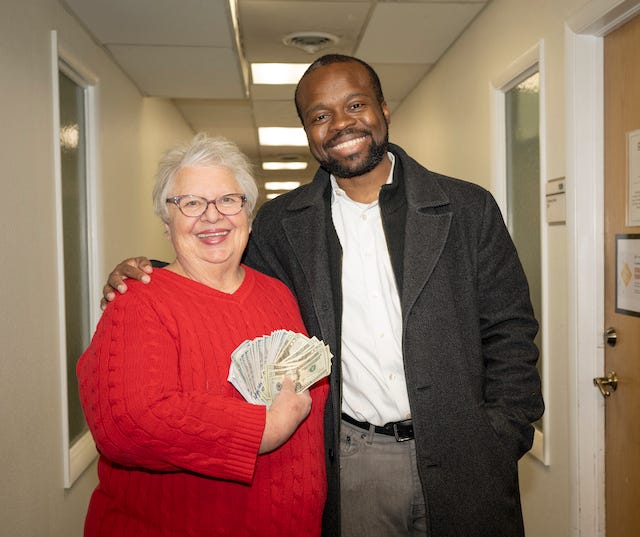
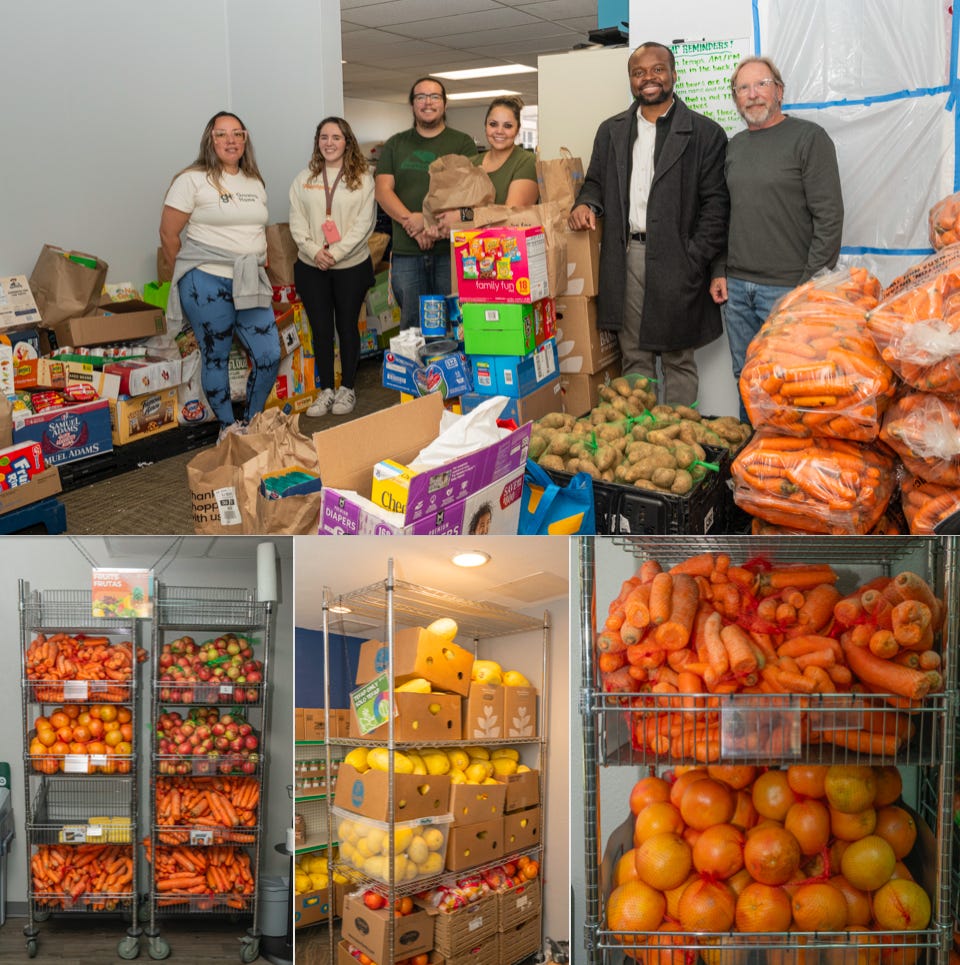
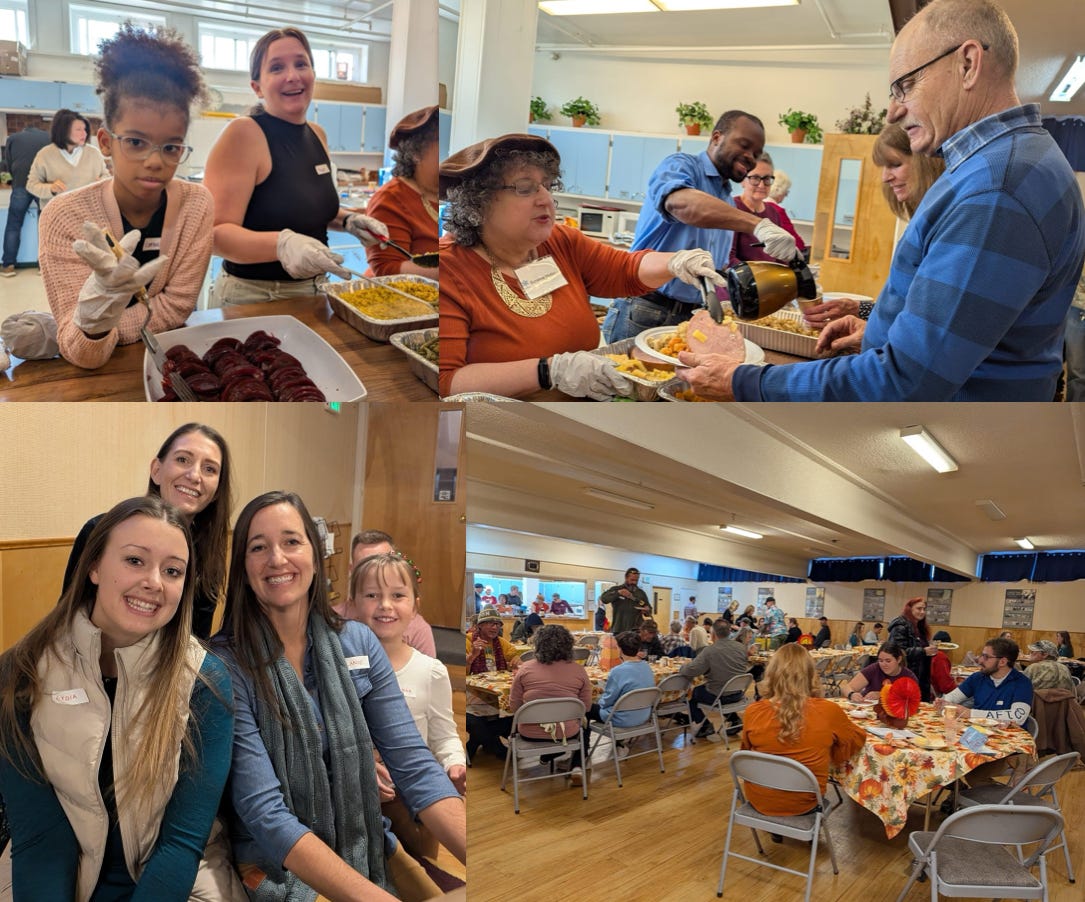
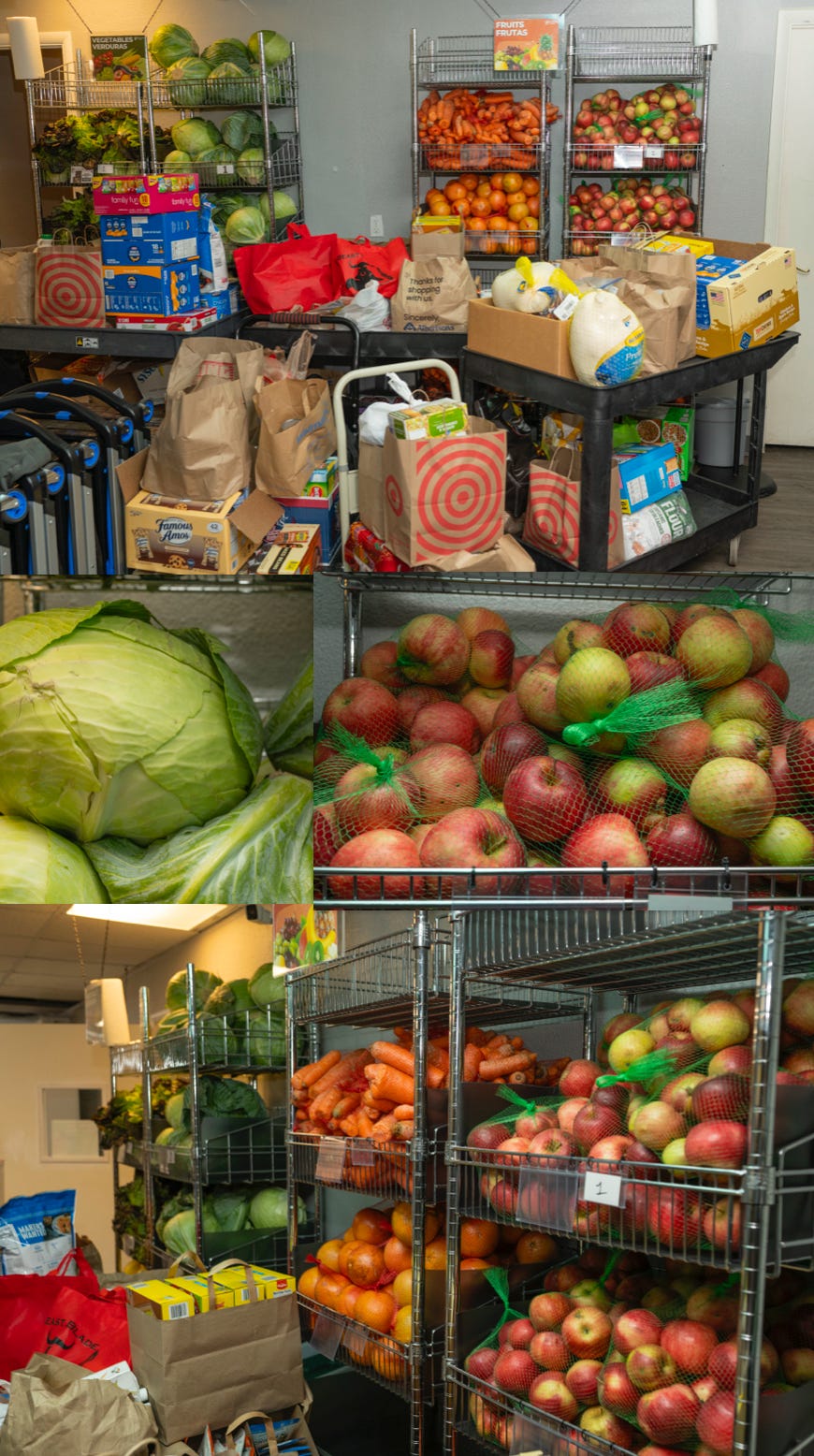
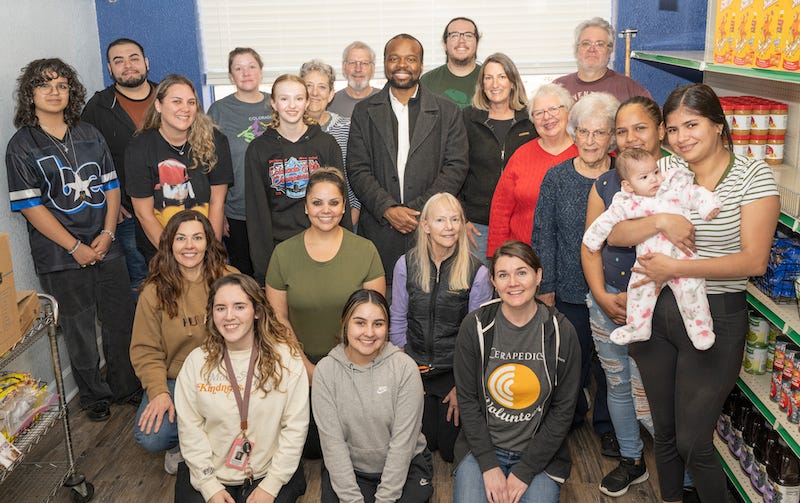
Pics below! 7,612 pounds of food + $2,105 raised
We raised 7,612 pounds of food for Growing Home, smashing our goal of feeding 1,000 people—this will feed 6,343! Additionally, we more than doubled our original goal of raising $1,000 for FISH of Westminster, raising $2,105 to fully fund their annual Thanksgiving lunch and provide a week of meals for daily clients.
None of this would have been possible without the incredible partnership of Frontline Farming, whose significant donation and support were instrumental in making this drive a success. Huge thank you to Jessica, Fatuma, Kasey and the whole Frontline staff and leadership.
Huge thanks as well to Westminster residents, donors beyond our city, and media partners like Monte Whaley at the Westminster Window who helped spread the word. Plans are already underway to scale up next year and make the drive even bigger!
Yours in service and hope,
Obi Ezeadi
Civics 101 Replay: “Development”
Originally published May 2022
Note: Some information may be outdated, as this lesson was published in May 2022; since then, I’ve worked with Council to legalize Accessory Dwelling Units (ADUs) and updated the 2040 Comprehensive Plan twice.
Civics 101: Development

Disclaimer: Development is a vast and complicated topic. Even if you read and understand everything in my lesson below, it’s still probably only 50% inclusive of everything related to development. Future lessons can help fill those gaps.
Development has a long history spanning 30,000+ years. I will try to cover it in 5 sentences:
Humans abandoned the hunter-gather lifestyle towards an agrarian society that spawned a system of powerful tribal leaders that began to disperse and improve land in exchange for payment.
The Industrial Revolution accelerated the distribution of wealth to the point where banks allowed themselves to take on more risk by offering mortgages to regular people which stabilized populations with set locations that gave birth to economic engines of trade and commerce as we know it today.
Populations exploded as irrigation channels were dug, farming methods improved, temples were built, and taxes & tenancy established within a labor-for-protection schema where well-fed armies easily repelled raiders.
Royal families spread their wealth by signing away titles/deeds to revenue-generating lands, which eventually gave rise to merchant classes of specialized laborers with interests in skillsets beyond farming.
Today, the public sector (e.g. municipal governments) control approval for land development, including mix of land use, appearance, and infrastructure.
Some basics:
What physical factors constrain development? Development in Westminster is influenced by its natural features (such as rolling hills interspersed with creek corridors and waterbodies like Little Dry Creek, Walnut Creek, Big Dry Creek, Standley Lake, McKay Lake, and others).
What are zones? Zones determine how different spaces are used. One of the key functions of a City planner is to create and maintain zones by working with engineers, architects, and developers to create and plan buildings that follow the rules for each zone. Zoning and other land use regulations are permissive by nature, so where a use is not listed, it cannot be permitted.
What are land use character types? These provide direction for land use on a specific site. They include: Residential real estate, Residential low density, Residential medium density, Suburban Multi-Family, Urban Multi-Family, Mixed-Use neighborhood, Mixed-Use Activity center, Commercial, Service commercial sub-type, Commercial Mixed use sub-type, Neighborhood office, Employment - Flex, Employment - Offie/Institutional campus, Open Space/Major Creek Corridor, Parks/Golf courses, Public/Quasi-Public, and Agriculture/Conservation area.

What is development? Developing property in the City of Westminster (city spans 34 square miles) is when you identify all significant site plans, zoning, utility, traffic, mobility, and engineering issues that affect the layout of a project.Our open space network is comprised of 3,100 acres of land. Also, transportation corridors (US 36 and I-25) shape development - and our grid of roadways generally extend throughout the Denver Metro area.
When is a development review required? Development reviews by the city are required whenever there is any of the following: any new non-residential development, any kind of expansion of existing non-residential building(s), construction or expansion of any multi-family residential structure(s), new property subdivisions, any kind of exterior remodeling and/or site work on commercial or multi-family properties.
What’s the strategy? Westminster has a growth management plan and a comprehensive use plan. The Comp Plan is a living document that establishes a consistent statement of the city’s plans and policies for future development.

The 2040 Comp Plan got created concurrently along with 5 other plans: Water Supply Plan, Parks & Rec Plan, Transportation & Mobility Plan, Sustainability Plan, and Code Forward.
When will Comp Plan get updated? An update to the City’s Comprehensive Plan will be adopted this year. Factors baked into these plans vary, but personally I believe it must consider: rental and homeownership housing that is affordable, examine restrictive and exclusionary zoning regulations, property rights (people who own property have the right to develop it), utility systems, roadways, land use controls, alternative housing product types, tax policies affecting land, building codes, growth considerations, and more. A Housing Needs Assessment is typically performed to detail demographic shifts and identify how the gap between household incomes and home prices and rents have widened.
Are we at buildout? The most recent information provided to me indicates that the City has about 3% of developable land remaining. City aims to maintain 30% of the land for open space, parks, and recreation.
What is WEDA? The Westminster Economic Development Authority (WEDA) was created to “…provide a regulatory and financial vehicle for improving and redeveloping properties and facilities within defined urban renewal areas (URAs).” For example, the new Westminster Downtownis meant to replace the tax base that was once the Westminster Mall, and its URA (called “Westminster Center Reinvestment Plan Area”) is necessary to ensure the long-term economic sustainability of the city.
What about Accessory Dwelling Units (ADUs)? The City does not allow ADUs except for a select number of lots strategically planned and dispersed in the Bradburn development per their zoning and development plans. As mentioned earlier, zoning and other land use regulations are permissive by nature, so to allow and regulate ADUs, the City would need to establish this use via ordinance in the land use regulatory system.
Affordability and supply:
68% of municipalities say that home supply and affordability are their biggest challenges, and 63% say the situation has gotten worse over the past 3 years.
300,000 Coloradan households spend more than 50% of their income toward their housing costs.
More and more of Westminster is accepting the fact that all families are entitled to opportunities to succeed, which starts with ability to afford a secure, comfortable home.
Most folks are also on the same page that if we increase the supply of homes to meet demand it gives all families choices at different income levels, especially our seniors, working families, and people with disabilities. Families like our first responders, teachers, elders and service workers deserve a home to live in.
Other community-wide benefits include more and better jobs, economic vitality, reduced homelessness, better education, and improved health.
Future water use of undeveloped parcels:
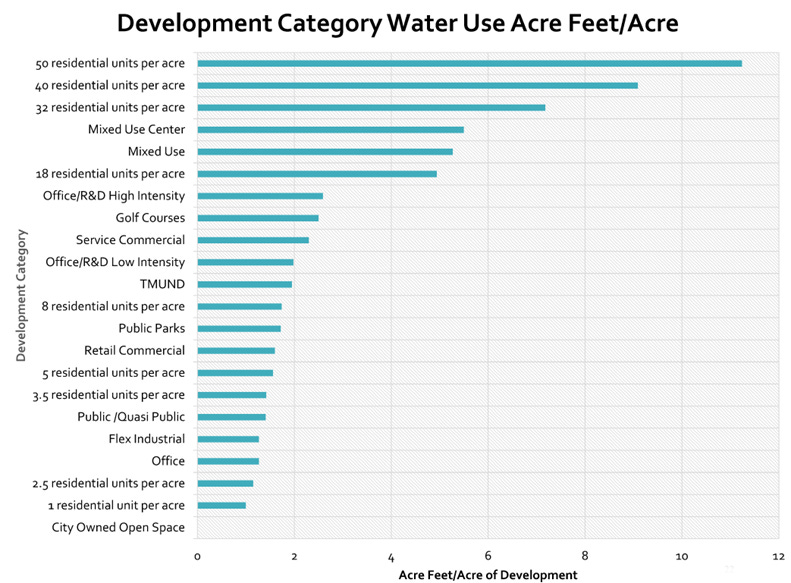
We will soon be reviewing the City’s water plan in relation to growth and development, but current water planning analyzes all of the City’s water meter data (33,000+ accounts) to get a range of values possible for each land use type, and we can project water use for the city as a whole.
Higher density development water use (e.g. R-36, or 36 residential units per acre and higher) use less water than previously expected.
A hot topic - Financial assistance to developers:
Based on a wide range of considerations, Westminster does provide assistance to developers, all subject to approval by City Council
Incentives may include: Rebates of building permit fees to reduce construction costs, Rebates of use taxes on construction to minimize costs during development, Rebates of permit fees, Assistance pursuing county personal property tax rebates and state incentive and job training grant programs, Assistance pursuing applicable state incentives
What about Metropolitan Special Districts (MSDs)?
MSDs are formed by developers to finance, construct and maintain public improvements related to a proposed development. The MSDs levy ad valorem property taxes and charge fees to residents. Those taxes are used to reimburse developers for the costs of the improvements. These districts are enabled under Title 32 of the Colorado Revised Statutes (not Westminster Municipal Code).
There are 7 existing residential MSDs (R) and 9 commercial MSDs (C) in Westminster:
R: 144th Avenue Metro District #1
R: 144th Avenue Metro District #2
R: Bradburn Metro District #3
R: Country Club Highlands Metro District
R: Huntington Trails Metro District
R: Hyland Village Metro District
R: Orchard Park Place South Residential MSD
C: Bradburn Metro District #1
C: Bradburn Metro District #2
C: Church Ranch Metro District
C: Country Club Village Metro District
C: Countryside Metro District
C: NBC Metro District
C: Orchard Park Place North MSD
C: Orchard Park Place South MSD
C: Westglenn Metro District
Projects under review (see Development Review Map)
List of redeveloped areas since founding of WEDA:
Holly Park
Mandalay Gardens
North Huron
South Sheridan
Westminster Center East Sub-Area
Historic Westminster
Downtown Westminster
“Government Unpacked” is a fact-based newsletter delivering deep dives on politics, history, and civics from a Colorado policymaker to help you unpack government and find your purpose to change the world.
Share it with a friend or neighbor. The better informed we are, the stronger our democracy.
🚨For Westy Residents: Bookmark these two important pages below🚨
Click: Important Westminster Events and Projects
On my newsletter’s homepage, I create a special, one-stop page that has information and links to everything you want to know about regarding (the important) Westminster events and major projects. All in one place.
Click: Obi’s Community Resources Master List
This page has a collection of links to important community resources related to water bills, housing, healthcare and more. If you know of a resource that should be added to this list, please email me to let me know!
Link to my full voting record.
Some ways I try to meet you where you are:
I hold weekly office hours (every Monday at 4:30PM at City Hall) - no appointment needed
Follow Obi on Instagram
Text or call me: 720-447-5606
Door-knocking (not for an election) to meet you where you are, connect you to resources and hear from you about issues I should prioritize
City Council Town Halls around the city